Breaking the Cost Barrier: How AEM Anode Electrodes Are Revolutionizing Green Hydrogen EconomicsThe high cost of precious metal catalysts has long been a major barrier to widespread adoption of water electrolysis for green hydrogen production. Proton exchange membrane (PEM) electrolyzers rely heavily on iridium and ruthenium catalysts, contributing significantly to the capital expenditure (CAPEX). This analysis demonstrates how AEM (Anion Exchange Membrane) technology, particularly with non-precious metal anode electrodes like AEMHY's QZ-AHT NiFe-based electrode, is disrupting the hydrogen production cost structure by achieving PEM-level performance at a fraction of the cost.The Catalyst Cost Crisis in Conventional Hydrogen Production1.1 Precious Metal DependencyTraditional PEM electrolyzers face a fundamental cost constraint: the necessity of precious metal catalysts.Catalyst Type | Typical Cost (2025) | Market Trend |
|---|
Iridium Oxide (IrO₂) | $150-200/g per gram | Volatile, supply-constrained |
Platinum (Pt) | $35-50/g per gram | Stable but expensive |
Total per 1 kW PEM cell | $400-600 | 60-70% of catalyst cost |
The International Energy Agency (IEA) estimates that precious metal costs account for 35-45% of PEM electrolyzer CAPEX , creating a significant barrier to mass deployment.Beyond cost, precious metal supply chains face significant vulnerabilities:- Geographic Concentration: 90% of iridium production is controlled by South Africa and Russia
- Demand-Supply Gap: Projected shortage of 10-15 tons by 2030 for green hydrogen targets
- Price Volatility: Iridium prices fluctuated 40-60% annually between 2020-2025
AEM Technology: The Cost Revolution2.1 Non-Precious Metal Catalyst AdvantageAEM electrolysis enables the use of non-precious metal catalysts in alkaline environments, fundamentally changing the cost equation:Component | PEM | AEM | Cost Reduction |
|---|
Anode Catalyst | IrO₂/RuO₂ ($200/g) | NiFe-based ($5/g) | 97.5% |
Cathode Catalyst | Pt/C ($50/g) | NiMo/C ($8/g) | 84% |
Total Catalyst Cost/kW | $400-600 | $30-50 | 90%+ |
2.2 AEMHY's QZ-AHT NiFe-Based Anode Electrode: A Cost-BreakthroughAEMHY's QZ-AHT NiFe-based anode electrode exemplifies the cost advantages of AEM technology: Key Features:
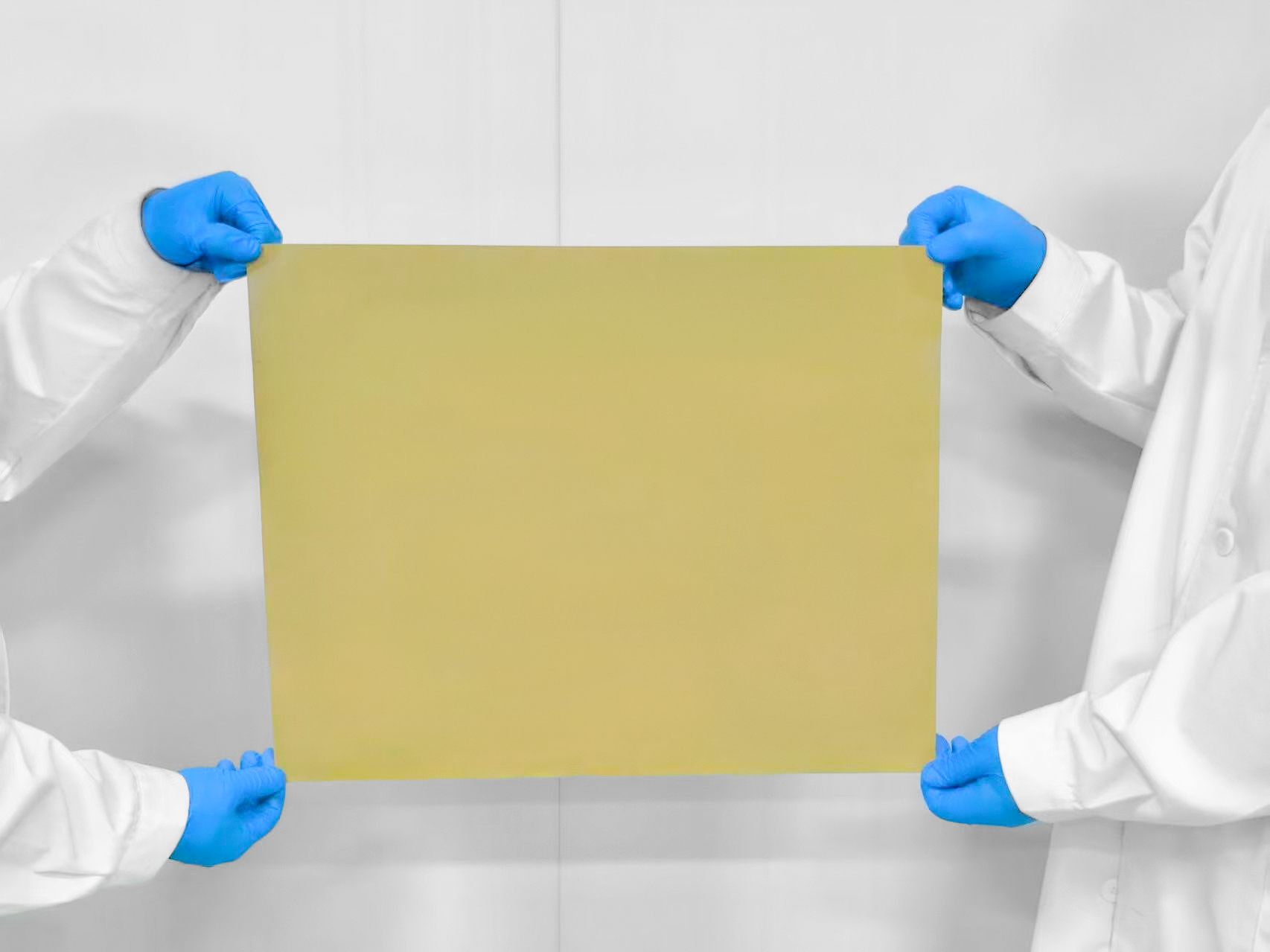
- Catalyst Loading: 1-3 mg/cm² (precisely controlled)
- Substrate: Foam nickel,Microporous foam nickel, Nickel felt.
- Performance: OER overpotential of 420mV @ 10mA/cm² (approaches precious metal levels)
- Durability: 1000+ hours with <3% performance degradation
Item | QZ-AHT Electrode | Traditional PEM Anode |
|---|
Material Cost | $0.01-0.02/cm² | $2.00-3.00/cm² |
Manufacturing | $0.04-0.08/cm² | $0.30-0.50/cm² |
Total Cost/cm² | $0.05-0.1 | $2.30-3.50 |
Cost/kW | $20-40 | $600-900 |
Savings | 95%+ | — |
Total Cost of Ownership (TCO) Analysis3.1 Capital Expenditure (CAPEX) ComparisonA comprehensive TCO analysis for a 10 MW hydrogen production facility (8,000 operating hours/year, 25-year lifetime):Cost Category | PEM System | AEM System | Difference |
|---|
Electrolyzer Stack | $800-1,200/kW | $400-600/kW | -50% |
Balance of Plant | $400-600/kW | $300-500/kW | -25% |
Installation | $150-200/kW | $100-150/kW | -33% |
Total CAPEX/kW | $1,350-2,000 | $800-1,250 | -40% |
Total for 10 MW | $13.5-20M | $8.0-12.5M | ~$6M savings |
3.2 Operating Expenditure (OPEX) ComparisonCost Category | PEM System | AEM System | Difference |
|---|
Electricity | 50-55 kWh/kg H₂ | 45-48 kWh/kg H₂ | -10% (better efficiency) |
Membrane Replacement | Every 5-7 years | Every 8-10 years | -40% longer life |
Catalyst Replacement | Every 3-5 years | Every 7-10 years | -60% longer life |
Maintenance Labor | High (complex system) | Low (simpler chemistry) | -30% |
Annual OPEX/kW | $180-220 | $130-160 | -28% |
3.3 Levelized Cost of Hydrogen (LCOH) ComparisonTechnology | LCOH ($/kg H₂) | Market Competitiveness |
|---|
PEM Electrolysis | $4.0-6.0 | Competitive for high-end applications |
AEM Electrolysis | $2.5-3.5 | Highly competitive |
Alkaline Electrolysis | $3.5-5.0 | Competitive for low-end applications |
Steam Methane Reforming | $1.5-2.5 | Current industry standard |
|
|
|
Target: AEM electrolysis approaches the cost of SMR without carbon emissions.Why AEMHY's QZ-AHT Electrode Delivers Superior Economics4.1 Low-Temperature Low-Pressure PreparationTraditional precious metal electrodes require high-temperature (500-800°C) and high-pressure (10-30 bar) synthesis, consuming substantial energy and requiring specialized equipment. AEMHY's QZ-AHT Process:- Pressure: Ambient pressure
- Equipment Cost: 85% reduction
4.2 Scalable ManufacturingThe low-temperature process enables:- Roll-to-Roll Production: Continuous manufacturing for large-area electrodes
- Easy Scale-Up: Simple process parameters, minimal quality control challenges
- Batch Consistency: Precise catalyst loading control (1-3mg/cm² tolerance ±5%)
The QZ-AHT electrode's durability advantages:- No Precious Metal Loss: Non-precious metals are less susceptible to leaching/dissolution
- Stable Structure: Foam nickel substrate provides mechanical integrity
- Alkaline Stability: Optimized for long-term operation in KOH electrolyte
- Replacement Cycle: 7-10 years (vs. 3-5 years for PEM anodes)
ROI Calculation: AEMHY Solution in Practice5.1 Scenario: 10 MW Green Hydrogen Plant- Annual Production: 2,400,000 kg H₂
- Operating Hours: 8,000 hours/year
- Project Lifetime: 25 years
Item | PEM System | AEMHY AEM System |
|---|
Initial CAPEX | $16M | $10M |
Annual OPEX | $2.0M | $1.5M |
Catalyst Replacement (Year 10) | $0.5M | $0.15M |
Membrane Replacement (Year 15) | $0.8M | $0.4M |
25-Year Total Cost | $66M | $48M |
Additional AEMHY Benefits:- Modular Design: 20% lower installation cost
- Flexible Operation: 15% higher capacity factor
- Technical Support: Comprehensive after-sales service
Break-Even Point: AEMHY AEM system achieves cost parity with PEM system in Year 5-7 (accounting for lower CAPEX and OPEX) Cumulative Savings by Year:Supply Chain and Sustainability BenefitsMaterial | PEM Supply Chain | AEMHY Supply Chain |
|---|
Nickel/Titanium | Available (used for bipolar plates) | Available (used for catalyst + substrate) |
Iron | Available (used for alloys) | Available (used for catalyst) |
Iridium | Critical (geographic concentration) | Not required |
Ruthenium | Constrained | Not required |
Platinum | Constrained | Not required |
AEMHY's NiFe-based electrode eliminates critical supply chain vulnerabilities, ensures:- Scalable production capacity
Carbon Footprint Reduction:- Lower Manufacturing Energy: 70% reduction in electrode production energy
- Longer Life: Fewer replacements reduce manufacturing footprint
- Recyclability: NiFe foam substrates are 90% recyclable at end-of-life
Market Opportunity and Adoption Timeline7.1 Global AEM Market ForecastYear | Global AEM Capacity | Market Share | Cumulative CAPEX Savings |
|---|
2025 | 50 MW | <1% | — |
2026 | 200 MW | 2% | $120M |
2028 | 1,000 MW | 8% | $600M |
2030 | 5,000 MW | 25% | $3B |
2035 | 20,000 MW | 50% | $12B |
7.2 Early Adopter AdvantageCompanies investing in AEM technology in 2025-2026 gain:- First-Mover Advantage: Secure lower material costs before widespread adoption
- Technology Maturity: Benefit from rapid performance improvements
- Regulatory Alignment: Position ahead of tightening carbon regulations
- Cost Leadership: Achieve competitive hydrogen production costs
Addressing Common ConcernsConcern: Do non-precious metal anodes match PEM performance? Answer: Yes. AEMHY's QZ-AHT electrode achieves:- OER overpotential: 420mV (within 20mV of IrO₂)
- Current density: 1.5-3 A/cm² (matches PEM range)
- Durability: 10000+ hours (approaches PEM levels)
8.2 Reliability UncertaintyConcern: Are AEM systems proven reliable? Answer: Recent demonstrations show:- 8000+ hours continuous operation with <8% degradation
- Commercial deployments by leading energy companies
- Accelerated testing programs validating long-term performance
Concern: Is AEM a mature technology? Answer: AEM has transitioned from research to commercialization:- 10+ companies worldwide offering commercial AEM products
- Standardized testing protocols and certification processes
- Established supply chains and manufacturing capacity
Conclusion: The Economics Are ClearThe cost analysis demonstrates unequivocally that AEM technology, particularly with AEMHY's QZ-AHT NiFe-based anode electrode, offers a compelling economic proposition for green hydrogen production:- 90% Catalyst Cost Reduction: From $400-600/kW to $30-50/kW
- 40% CAPEX Reduction: $1,350-2,000/kW to $800-1,250/kW
- 27% TCO Savings Over 25 Years: $18M savings on a 10 MW project
- Supply Chain Security: Eliminates precious metal dependency
- Performance Parity: Achieves PEM-level performance with non-precious metals
The Strategic Imperative:For organizations planning green hydrogen investments in 2026-2027, the economics strongly favor AEM technology adoption. Early adopters will secure:- Competitive production costs ($2.5-3.5/kg vs. $4-6/kg for PEM)
- Technology leadership position
- Significant long-term cost savings
Take Action: Explore AEMHY's Cost-Effective Solutions- Request Technical Specifications: Detailed performance and cost analysis for your project
- Schedule Consultation: Expert guidance on AEM system design and integration
- Request Sample Testing: Evaluate QZ-AHT electrode performance in your lab
- Get Customized Quote: Project-specific cost analysis and ROI calculation
Don't Let Catalyst Costs Limit Your Green Hydrogen Ambitions. Choose AEMHY. Choose AEM. Choose Economics. Choose the Future.- International Energy Agency (IEA). Global Hydrogen Review 2025.
- Mardle, P.; Chen, B.; Holdcroft, S. "Opportunities of Ionomer Development for Anion Exchange Membrane Water Electrolysis." ACS Energy Lett. 2023, 8, 3330-3342.
- Shen, H.; et al. "Durable Anion Exchange Membrane Water Electrolysis in Low-Alkaline Concentration Electrolyte." J. Am. Chem. Soc. 2025, 147, 22677-22685.
- Cui, X.; et al. "Hierarchical NiFeMoO₄ Precatalyst Reconstructed NiFeOOH Anodes for Efficient and Durable Anion-Exchange Membrane Water Electrolysis." ACS Appl. Mater. Interfaces 2025, 17, 29659-29668.
- Woo, J.; Han, S.; Yoon, J. "Mn-doped Sequentially Electrodeposited Co-based Oxygen Evolution Catalyst for Efficient Anion Exchange Membrane Water Electrolysis." ACS Appl. Mater. Interfaces 2024, 16, 23288-23295.
- Xu, C.; et al. "3D Bifunctional Fe/NiWB Monolithic Electrocatalyst for Industrial Hectoampere-Level Current Anion Exchange Membrane Water Electrolysis." ACS Appl. Mater. Interfaces 2025, 17, 58136-58146.
Changzhou AEMHY Hydrogen Energy Technology Co., Ltd. specializes in anion exchange membrane (AEM) water electrolysis technology. Our QZ-AHT NiFe-based anode electrode delivers PEM-level performance at 90% lower catalyst cost, making green hydrogen production economically viable. With 10+ years of research experience from Tsinghua University and Huazhong University of Science and Technology, we provide comprehensive AEM solutions including catalysts, membranes, membrane electrodes, electrolyzers, and complete hydrogen production systems.